Stonemans Cavalry Came and Tore Up the Tracks Again
| "The Night They Drove Former Dixie Down" | |
|---|---|
| Single by The Band | |
| from the anthology The Band | |
| A-side | "Up on Cripple Creek" |
| Released | September 22, 1969 |
| Recorded | 1969 |
| Genre |
|
| Length | 3:33 |
| Label | Capitol |
| Songwriter(southward) | Robbie Robertson |
| Producer(s) | John Simon |

The Band also released a live album titled for and featuring the song.
"The Nighttime They Drove Erstwhile Dixie Downwards" is a song written by Robbie Robertson and originally recorded by the Canadian-American roots rock group The Ring in 1969 and released on their eponymous second album. Levon Helm provided the atomic number 82 vocals. The song is a first-person narrative relating the economic and social distress experienced past the protagonist, a poor white Southerner, during the last twelvemonth of the American Ceremonious War, when George Stoneman was raiding southwest Virginia. The vocal appeared at number 245 on Rolling Stone magazine's list of the 500 greatest songs of all time.
Joan Baez'southward version peaked at #3 on the Hot 100 on 2 October 1971; it did also on the Cashox Top 100 chart. However, on the Record World Magazine Summit Singles nautical chart for the week of September 25, 1971, the Baez unmarried striking #1 for one week.[1]
Creation and recordings [edit]
The vocal was written by Robbie Robertson, who spent nearly eight months working on it.[2] Robertson said he had the music to the vocal in his head and would play the chords over and over on the piano but had no idea what the vocal was to be about. Then the concept came to him and he researched the field of study with help from the Ring's drummer Levon Helm, a native of Arkansas.[three] [2] In his 1993 autobiography, This Wheel'south on Burn, Helm wrote, "Robbie and I worked on 'The Night They Collection Quondam Dixie Down' up in Woodstock. I call back taking him to the library so he could research the history and geography of the era and make General Robert E. Lee come out with all due respect."
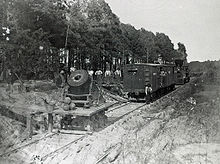
The lyrics tell of the last days of the American Civil War, portraying the suffering of the protagonist, Virgil Caine, a poor white Southerner. Dixie is the historical nickname for the states making up the Confederate States of America.[4] The vocal's opening stanza refers to 1 of George Stoneman'southward raids backside Confederate lines attacking the railroads of Danville, Virginia, at the cease of the Civil State of war in 1865:
Virgil Caine is the name, and I served on the Danville train
Till Stoneman'south cavalry came and tore upwardly the tracks again
In the wintertime of '65, we were hungry, just barely alive
Past May the tenth, Richmond had fell, it's a time I recall, oh so well
"The Night They Drove Onetime Dixie Downward" is considered 1 of the highlights of The Band, the group's second album, which was released in the fall of 1969.[4] According to Rob Bowman'south liner notes to the 2000 reissue of The Ring, the album has been viewed every bit a concept anthology, with the songs focusing on the peoples, places and traditions associated with an older version of Americana.
The Ring frequently performed the song in concert, and it is included on the group's live albums Rock of Ages (1972) and Before the Flood (1974). The vocal also was included in the Ring'southward Thanksgiving Day concert in 1976 which was the subject area of Martin Scorsese's documentary film The Final Flit. The vocal also appears on the film's soundtrack album besides every bit on the grouping'due south 2d box set, A Musical History and their double-deejay collection of hits, To Kingdom Come up.[v] [6]
The last time the song was performed past Helm was in The Final Waltz. Captain refused to play the song afterwards. Although information technology has long been believed that the reason for Helm's refusal to play the song was a dispute with Robertson over songwriting credits, according to Garth Hudson the refusal was due to Helm's dislike for Joan Baez'due south version.[7]
Reception [edit]
The vocal was number 245 on Rolling Stone mag'due south listing of the 500 greatest songs of all time.[three] Pitchfork Media named it the 40-2d best vocal of the Sixties.[8] The song is included in the Rock and Roll Hall of Fame's "500 Songs that Shaped Rock and Whorl"[nine] and Time magazine'due south All-Fourth dimension 100.[10]
Critic Ralph J. Gleason (in the review in Rolling Stone (U.S. edition just) of October 1969) explains why this song has such an impact on listeners:
Nothing I have read … has brought home the overwhelming man sense of history that this song does. The only thing I can relate it to at all is The Red Badge of Courage. It's a remarkable song, the rhythmic structure, the voice of Levon and the bass line with the drum accents and so the heavy shut harmony of Levon, Richard and Rick in the theme, make it seem impossible that this isn't some traditional cloth handed downwards from father to son straight from that winter of 1865 to today. Information technology has that ring of truth and the whole aureola of authenticity.
21st century political criticism [edit]
Some commentators in the 21st century accept questioned whether the song'south original lyrics made it an endorsement of slavery and the credo of the Lost Crusade of the Confederacy.[12] In 2009, writing in The Atlantic, Ta-Nehisi Coates characterized the song as "another story almost the blues of Pharaoh."[xiii] In an August 2020 interview in Rolling Rock, Early James described how he had started changing the lyrics of the song to oppose the Amalgamated cause — for instance, in the first verse, "where Helm sang that the fall of the Confederacy was 'a time I remember oh then well,' James declared it 'a fourth dimension to bid farewell," and he reworked the last poesy to country "Dissimilar my begetter earlier me, who I will never sympathize... I think it'southward time we laid hate in its grave."[14] Others argue that these views are based on a misunderstanding of the song, which does not glorify slavery, the Confederacy, or Robert E. Lee, but, rather, tells the story of a poor, not-slave-belongings Southerner who tries to make sense of the loss of his blood brother and his livelihood.[15]
Joan Baez version [edit]
| "The Dark They Drove Old Dixie Down" | ||||
|---|---|---|---|---|
 | ||||
| Unmarried by Joan Baez | ||||
| from the album Blest Are... | ||||
| B-side | "When Time Is Stolen" | |||
| Released | August 1971 | |||
| Genre | Country Folk | |||
| Length | 3:26 | |||
| Label | Vanguard | |||
| Songwriter(s) | Robbie Robertson | |||
| Producer(south) | Norbert Putnam | |||
| Joan Baez singles chronology | ||||
| ||||
The most successful version of the song was the one by Joan Baez, which became a RIAA-certified Golden record on 22 October 1971.[16] In add-on to chart action on the Hot 100, the tape spent v weeks atop the easy listening chart.[17] Billboard ranked it as the No. twenty song for 1971. The version reached number six in the pop charts in the Britain in October 1971.
The Baez recording had some changes in the lyrics.[18] Baez later told Rolling Rock 's Kurt Loder that she initially learned the song by listening to the recording on the Band's album, and had never seen the printed lyrics at the time she recorded it, and thus sang the lyrics as she had (mis)heard them. In more recent years in her concerts, Baez has performed the vocal as originally written by Robertson.[19]
Chart functioning [edit]
Weekly singles charts [edit]
| Nautical chart (1971) | Peak position |
|---|---|
| Australia National Top 40 (Go-Prepare)[twenty] | 5 |
| Canada RPM Superlative Singles[21] | iii |
| Canada RPM Adult Gimmicky[22] | 1 |
| Ireland (IRMA)[23] | 8 |
| New Zealand (Listener)[24] | 4 |
| UK Singles Chart[25] | six |
| U.South. Billboard Hot 100 | 3 |
| U.S. Billboard Adult Contemporary | 1 |
| U.Due south. Cashbox Top 100[26] | 3 |
Year-terminate charts [edit]
| Nautical chart (1971) | Rank |
|---|---|
| Canada[27] | 39 |
| U.S. Billboard Hot 100[28] | 20 |
| U.Southward. Cash Box [29] | 21 |
Other versions [edit]
Johnny Cash recorded the vocal on his 1975 album John R. Cash. Old-fourth dimension musician Jimmy Arnold recorded the vocal on his album Southern Soul, which was composed of songs associated with the Southern side of the Ceremonious War. A fairly large-scale orchestrated version of the song appears on the 1971 concept album California '99 by Jimmie Haskell, with lead vocal by Jimmy Witherspoon. Others to record versions include Don Rich, Steve Immature, John Denver, the Allman Brothers Band, Derek Warfield. the Charlie Daniels Ring, Big Country, the Dave Brockie Experience, Vikki Carr, Richie Havens, the Black Crowes, Solomon Burke, Earl Thomas Conley, the Jerry Garcia Band, Sophie B. Hawkins, Legion of Mary, and the Zac Brown Ring accept included it on live albums. In 2008, Johnny Logan covered the vocal on his anthology, Irishman in America. Glen Hansard (of the Frames and the Swell Season), accompanied by Lisa Hannigan and John Smith, performed the song in July 2012 for The A.V. Guild 's A.Five. Underground: Summertime Interruption series.[xxx]
The 1972 song "Am Tag als Conny Kramer starb" ("On the Day That Conny Kramer Died"), which uses the tune of the song, was a number-one hit in West Germany for vocaliser Juliane Werding. The lyrics are about a swain dying because of his drug addiction. In 1986, the German band Die Goldenen Zitronen made a parody version of this song with the title "Am Tag als Thomas Anders starb" ("On the Day That Thomas Anders Died").
Personnel on the Ring version [edit]
- Levon Helm – lead vocals, drums
- Rick Danko – bass guitar, bankroll vocals
- Garth Hudson – melodica, slide trumpet
- Richard Manuel – piano, backing vocals
- Robbie Robertson – audio-visual/electric guitar, backing vocals
See as well [edit]
- List of anti-war songs
- Listing of number-i developed contemporary singles of 1971 (U.S.)
- Listing of train songs
References [edit]
- ^ "Record World Top Single Nautical chart" (PDF). Record World. 26 (1267): 35. September 25, 1971.
- ^ a b Hoskyns, Barney (1993). Across the Nifty Divide: The Band and America . Hyperion. p. 175. ISBNone-56282-836-3.
- ^ a b "The Night They Drove Sometime Dixie Down". Rolling Stone. Archived from the original on June 21, 2008. Retrieved November 9, 2010.
- ^ a b Ankeny, Jason. "The Ring: The Night They Drove Erstwhile Dixie Down". allmusic.com. AllMusic. Retrieved September 2, 2019.
- ^ Marcus, Greil (October xix, 2010). Bob Dylan by Greil Marcus: Writings 1968-2010 . PublicAffairs. pp. 73. ISBN9781586489199 . Retrieved July 4, 2015.
- ^ Erlewine, Stephen Thomas. "The Band: A Musical History". allmusic.com. AllMusic. Retrieved September 2, 2019.
- ^ Margolis, Lynne (August xxx, 2012). "No Faux Bones: The Legacy of Levon Helm". American Songwriter . Retrieved March 2, 2016.
- ^ "The 200 Greatest Songs of the 1960s: Part Four: #60-21", Pitchfork Media, Baronial 17, 2006
- ^ "500 Songs That Shaped Stone". Infoplease.com. Retrieved November 6, 2011.
- ^ Cruz, Gilbert (October 24, 2011). "100 Greatest Pop Songs: Fourth dimension List of All-time Music". Time . Retrieved November six, 2011.
- ^ Bailey, Frankie Y.; Dark-green, Alice P. (2011). Wicked Danville: Liquor and Lawlessness in a Southside Virginia Urban center. The History Press. pp. 103–. ISBN9781609490379 . Retrieved July 4, 2015.
- ^ Hamilton, Jack (August 13, 2020). "Is "The Night They Drove Old Dixie Downwardly" Really a Pro-Amalgamated Anthem?". Slate . Retrieved August 13, 2020.
- ^ Coates, Ta-Nehisi (August 17, 2009). "Virginia". The Atlantic . Retrieved September v, 2020.
- ^ Vozick-Levinson, Simon (August 6, 2020). "Can 'The Night They Drove Old Dixie Down' Be Redeemed?". Rolling Rock . Retrieved Baronial thirteen, 2020.
- ^ "'The Dark They Collection Sometime Dixie Down' Needs No Redemption". savingcountrymusic.com. August 8, 2020.
- ^ "Joan Baez The Night They Drove Old Dixie Down". Retrieved September 17, 2020.
- ^ The Billboard Book of Elevation 40 Hits, 6th Edition, 1996 p. 43
- ^ The Last Waltz of The Ring Neil Minturn - 2005- Page 85 "be more than familiar to some in Joan Baez'south version. Hoskyns remarks of Baez's version: "Two years later, Joan Baez recorded a terrible version of 'Dixie' that seemed to plough Robert E. Lee into a steamboat, but it fabricated"
- ^ Kurt Loder (Apr 14, 1983). "Joan Baez: The Rolling Stone Interview". Rolling Stone. No. 393.
- ^ "Go-Set National Acme twoscore". Dec four, 1971. Retrieved Feb 11, 2016.
- ^ "RPM Singles - Peak Hits of '71". Collectionscanada.gc.ca. Archived from the original on March 4, 2016. Retrieved March 2, 2016.
- ^ "Item Display - RPM - Library and Archives Canada". Collectionscanada.gc.ca. Oct 9, 1971. Retrieved March xix, 2018.
- ^ "The Irish Charts – Search Results – The Dark They Drove Sometime Dixie Downwardly". Irish Singles Chart. Retrieved March 27, 2018.
- ^ "flavour of new zealand - search listener". Flavourofnz.co.nz . Retrieved October 4, 2016.
- ^ "JOAN BAEZ - full Official Nautical chart History - Official Charts Visitor". www.officialcharts.com.
- ^ "Greenbacks Box Summit 100 10/02/71". cashboxmagazine.com. October 2, 1971. Retrieved March two, 2016.
- ^ "Particular Display - RPM - Library and Archives Canada". Collectionscanada.gc.ca . Retrieved March 2, 2016.
- ^ "Acme 100 Hits of 1971/Meridian 100 Songs of 1971". Musicoutfitters.com . Retrieved March 2, 2016.
- ^ "Cash Box YE Pop Singles - 1971". cashboxmagazine.com. Dec 25, 1971. Retrieved March 2, 2016.
- ^ "Glen Hansard, Lisa Hannigan & John Smith cover The Band". Retrieved Apr 6, 2013.
Further reading [edit]
- Brooke Gladstone. Why Some Hear 'The Dark They Drove Old Dixie Down' As A Neo-Confederate Anthem On the Media | WNYC. January viii, 2021.
External links [edit]
- Joan Baez - The Nighttime They Drove Sometime Dixie Down on YouTube
Source: https://en.wikipedia.org/wiki/The_Night_They_Drove_Old_Dixie_Down
0 Response to "Stonemans Cavalry Came and Tore Up the Tracks Again"
Postar um comentário